
Cybersecurity Is an Operations Issue for Manufacturers
For many manufacturers, cybersecurity has traditionally been viewed as an IT responsibility. Firewalls, passwords, and software updates often fall outside the daily conversations happening on the shop floor.
As manufacturing systems become more connected through digital technologies and Industry 4.0 tools, cybersecurity risks increasingly impact production itself. According to the NIST Manufacturing Extension Partnership’s cybersecurity resources for manufacturers, the manufacturing sector has become one of the most targeted industries for cyberattacks as operational technology and digital systems become more connected.
Recent reports highlight how quickly these threats are growing. Ransomware gangs collected more than $1 billion in payments in 2023, according to reports from Cybersecurity Dive. As attackers increasingly target industries that rely on continuous operations, manufacturing organizations have become particularly attractive targets.
For manufacturers, this means cybersecurity is no longer just about protecting data. It is about protecting operations.
Why Manufacturers Are Increasingly Targeted
Manufacturers hold valuable information including:
- Intellectual property
- Customer data
- Supply chain connections
At the same time, many small and mid-sized manufacturers operate with limited cybersecurity resources compared to larger organizations.
Because of this, attackers often see smaller manufacturers as potential entry points into larger supply chains. The NIST Manufacturing Extension Partnership guidance for manufacturers notes that compromising a supplier can provide attackers with access to larger companies, government systems, or critical infrastructure partners.
This makes cybersecurity a concern not just for individual manufacturers, but for entire supply networks.
Even when an attack does not target intellectual property, the operational impact can be significant. NIST cybersecurity resources highlight that the average cost of a data breach for a small business can exceed $100,000, not including the operational downtime and reputational damage that may follow.
Recent incidents show how quickly cyber events can affect manufacturing operations. A cyberattack on Jaguar Land Rover forced the automaker to halt production across multiple facilities while systems were secured and restored. According to Car and Driver, during the shutdown, the company was estimated to be losing up to $6.8 million per day in halted production, highlighting how quickly cyber incidents can move from digital systems to physical operations.
For manufacturers operating on tight production schedules and delivery commitments, even a short disruption can create ripple effects across operations.
The Growing Connection Between IT and the Shop Floor
In the past, production equipment often existed separately from traditional IT systems. Today those systems are increasingly connected. Sensors, machines, scheduling software, and production data platforms now share networks and exchange information in real time.
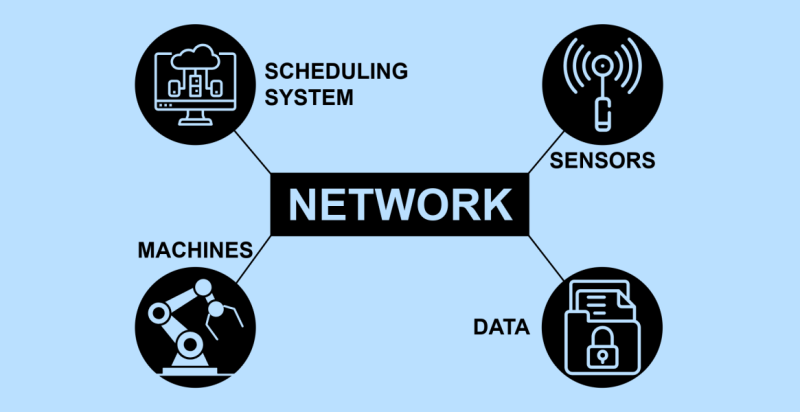
While this connectivity provides powerful advantages for manufacturers, it also expands the potential surface for cyber threats. The NIST cybersecurity resources for manufacturers emphasize that as operational technology and information systems converge, organizations must consider cybersecurity as part of their overall operational risk management.
A compromised network can impact:
- Production planning
- Equipment communication
- Operational decision making
In some cases, it can stop production entirely.
Learning Through Realistic Scenarios | KCMN’s March Cybersecurity Showdown
On Tuesday, March 10, KCMN members gathered at the KCK Chamber of Commerce for a morning of connection and conversation with fellow manufacturers. The event began with networking and coffee provided by Parisi Coffee and KCMN member Paris Brothers Inc., featuring the Manos de Mujer blend. Parisi’s Head Roaster, Adam, shared the story behind the coffee, which comes from a women led producer group in Honduras focused on elevating female coffee farmers and strengthening economic opportunity for women in coffee production.
Following networking, Jarrad Shull of Kansas City Managed IT led attendees through an interactive cyber-attack simulation. Participants stepped into employee roles and made real time decisions after a production line suddenly went down due to suspicious activity early on a Monday morning. Working in groups, attendees navigated the unfolding situation, exploring the operational, technical, and leadership decisions manufacturers may face during a cyber incident, with no wrong answers, only choices and consequences.
The exercise reinforced how quickly cyber incidents can impact operations and how critical preparation and cross team communication are during an event. By experiencing the scenario firsthand, attendees left with a clearer understanding of the decisions and coordination required to respond effectively when the unexpected happens.
A Growing Conversation in Manufacturing
Manufacturers routinely prepare for equipment failures, safety incidents, and supply chain disruptions. Cybersecurity now belongs in the same conversation.
As systems become more connected, the question is no longer whether cybersecurity matters to manufacturing operations. The question is how prepared organizations are to respond when something unexpected occurs.
Kansas Manufacturing Solutions helps manufacturers start the cybersecurity conversation now, before an incident forces it.
